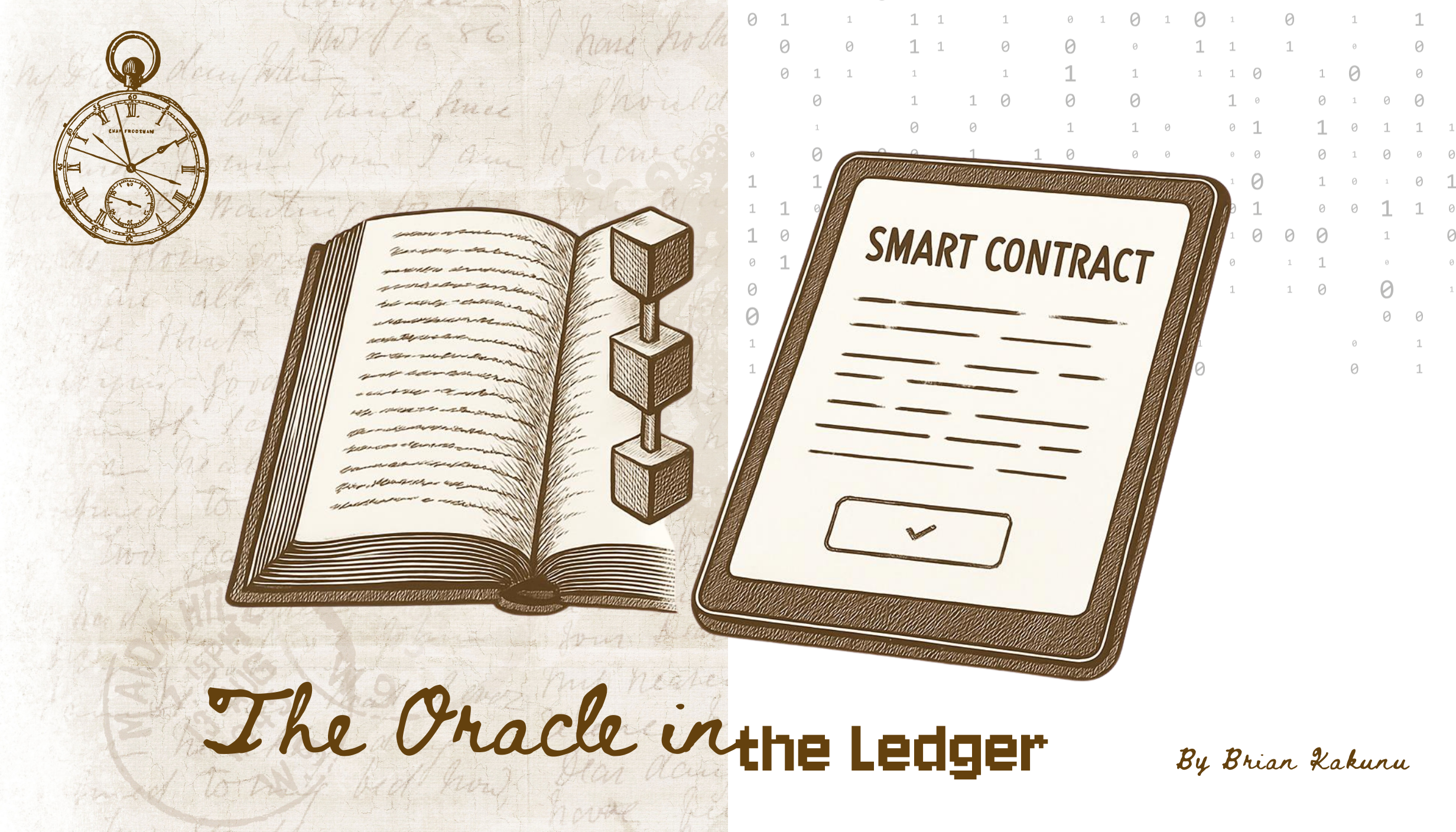
The Oracle in the Ledger: How AI is Rewriting the Promise of Insurance
For three hundred years, the business of risk was fundamentally a business of paper.
If you wanted to understand how a society protected its future, you only had to look in the filing cabinets. The industry lived in heavy, leather-bound ledgers, actuarial tables, and the fading ink of promises made in good faith. It was a simple, albeit slow, contract: If the worst happens, we will make you whole. But there is a fatal flaw in ink: it is entirely reactive. A handwritten policy sitting in a desk drawer cannot smell smoke. A spreadsheet cannot warn a cargo ship of a rogue wave, and a PDF cannot shut off a bursting water valve in the middle of the night. Traditional insurance was never designed to prevent the disaster; it was only designed to sweep up the ashes.
Today, that centuries-old contract is waking up.
Imagine waking up to a notification on your phone:
“Electrical anomaly detected in the kitchen wall at 3:14 AM. Circuit isolated. Local certified electrician dispatched for 9:00 AM. Cost covered.”
The fire never happened. You never spent hours on hold waiting for an adjuster. You never had to prove your loss.
To the everyday consumer, this feels like magic—a silent guardian seamlessly woven into the fabric of their home. But pull back the curtain, and you find a radically different story. To the developer, this is a beautiful, complex ecosystem where Optical Character Recognition(OCR) has digitized decades of historical data, feeding real-time machine learning models that process risk in milliseconds. And to the investor? It is a paradigm shift. It is the realization that the most valuable financial institutions of tomorrow won’t be the ones with the largest cash reserves to pay out claims, but the ones with the smartest algorithms to prevent them entirely.
The era of the static ledger is over. Welcome to the age of the living policy.
The Architect’s Blueprint
If the consumer experiences this new era of insurance as magic, the developer knows it as plumbing—incredibly complex, high-stakes plumbing.
For the software engineers, data scientists, and actuaries rebuilding this industry, the mandate is no longer just “automation.” Putting a shiny chatbot on top of a legacy, paper-based workflow is a waste of machine learning. Instead, what is happening behind the scenes is a masterclass in radical business process reengineering. It is about looking at a three-week claims investigation and asking: How do we reduce this to three seconds? Or better yet: How do we engineer the system so the claim never has to be filed in the first place?
The traditional insurance model required a human to verify a loss, assess the damage, and manually authorize a check. It was a system built on friction. The developer’s blueprint replaces that friction with pure, reactive logic. Nowhere is this more elegant than in the rise of parametric insurance.
Think of parametric insurance as the ultimate “If/Then” statement, executed via smart contracts. Imagine a farmer whose livelihood depends on seasonal rains. In the old world, a drought meant waiting for an insurance adjuster to drive out, inspect the dead crops, argue over the valuation, and process paperwork. In the new world, developers wire the policy directly to a network of weather satellites and soil-moisture IoT sensors.
* IF soil moisture drops below 15% for ten consecutive days…
* THEN trigger an automatic payout of $50,000 to the farmer’s account.
No human adjuster. No paperwork. The data is the claim.
But this playground is not without its broken glass. The architects of this new system face monumental challenges. They are wrestling with decades of siloed, messy historical data that must be cleaned and structured before it can train a reliable neural network. They are fighting the constant threat of algorithmic bias—ensuring a machine learning model doesn’t inadvertently redline a neighborhood or penalize a demographic based on flawed historical patterns.
Most importantly, they are battling the “Black Box” problem. If an intelligent system denies a claim, raises a premium, or flags a customer for fraud, the algorithm cannot simply shrug. Developers are tasked with building Explainable AI (XAI)—systems that can translate millions of data points and complex neural pathways into a plain-English explanation that a regulator, or a frustrated homeowner, can actually understand. The developers aren’t just writing code; they are writing the new laws of probability.
The Predictive Portfolio
If developers are the architects building the new engine of insurance, investors are the ones deciding where that engine is going to drive. And right now, they are steering massive amounts of capital toward a single, revolutionary idea: certainty.
Stripped of its branding, an insurer is essentially a giant pool of capital locked in a vault, waiting for a bad day. For centuries, the size of that vault was determined by looking backward. Actuaries stared at historical tables to guess the future, and because humans are famously bad at predicting chaos, regulators required insurers to hold vast, inefficient reserves of cash just in case those guesses were wrong.
AI changes the math entirely. It shifts the industry from a game of historical guesswork to a science of real-time prediction.
Imagine an institutional investor evaluating the risk on a massive portfolio of luxury high-rises and commercial properties across emerging global hubs. In the old world, underwriting that real estate meant looking at static, decade-old flood maps and fire statistics, then locking away millions in capital reserves to cover potential losses. But what happens when those properties are alive with data?
Suppose an AI model, digesting millions of data points from IoT structural sensors, localized climate models, and real-time supply chain metrics, can confidently state that the risk of a catastrophic event in that specific property portfolio over the next quarter is not 4%, but 0.8%. For an investor, that delta isn’t just a fun statistic—it is a financial revelation. It means Capital Efficiency.
* Unlocking the Vault: When predictive models reduce the margin of error, insurers no longer need to hoard quite as much capital in low-yield reserves. Billions of dollars can be safely unlocked and redirected into high-performing assets, growth markets, or competitive pricing strategies.
* The Shift in Valuation: The market is beginning to realize that the most valuable insurance companies of the next decade will not be the traditional giants with the oldest ledgers. They will be the tech companies that happen to sell insurance. The market premium goes to the firm with the sharpest, most accurate predictive algorithms.
* Preventative Yield: Investors are no longer just funding a safety net; they are funding a shield. By investing in insurers that provide proactive risk mitigation, they are actively driving down the frequency of claims, widening profit margins in real time.
Risk is no longer a dark, unpredictable cloud. It is a highly defined, quantifiable metric. For the forward-thinking investor, the AI-driven insurance model isn’t just a safer bet—it is a fundamentally more profitable way to deploy capital.
The Living Contract
The metamorphosis of insurance is not just a technological upgrade; it is a fundamental rewiring of trust.
When you pull back and look at the whole picture, the synergy is undeniable. The developer builds the predictive engine, the investor fuels it with optimized capital, and the consumer lives within its protective ecosystem. The dusty ledger has been entirely replaced by a dynamic, intelligent pulse.
To see the true power of this shift, you only have to look at how it collapses borders and mitigates distance. Picture a cross-border investor in Kenya looking to secure and insure a portfolio of new, high-yield properties in Dubai. In the old world, the geographic and informational divide made underwriting that kind of cross-continental risk a slow, manual, and incredibly expensive nightmare of paperwork.
Today, the “living contract” bridges that gap in milliseconds.
The developer’s architecture connects the Nairobi investor directly to the Dubai properties through real-time data feeds—smart sensors monitoring structural integrity, environmental factors, and occupancy rates. Because of this continuous, automated oversight, the investor’s capital is deployed with surgical efficiency, free from the dead weight of traditional, bloated risk reserves. And the end consumer—whether they are leasing a luxury apartment or running a commercial space in that high-rise—rests easy, knowing the building itself is actively anticipating and preventing disasters before they ever happen.
We are leaving behind an era where insurance was essentially a bet against disaster, recorded on dead trees.
Tomorrow’s insurance doesn’t wait for the storm to hit, the pipes to burst, or the crops to fail. The policy of the future is not a document sitting in a drawer; it is a living, breathing algorithm, constantly calculating, constantly learning, and actively working to keep the world safe.